
 Subscribe via Email
 Follow Us On Twitter
All Posts: ‘Entrepreneurship’

Motivational Clips for Entrepreneurs: “I Always Wanted to Start a Company”
by Scott Edward Walker on August 31st, 2013“People often say that motivation doesn’t last. Well, neither does bathing – that’s why we recommend it daily.” – Zig Ziglar
Welcome to our weekly series “Motivational Clips for Entrepreneurs.” Each week, we share a favorite video clip to inspire and motivate entrepreneurs. Why? Because we know how tough it is being an entrepreneur; and whether you’re just getting started or you’re trying to execute on your business model or you’re raising funds, you need a little juice to help you push the ball forward. I hope these videos are a little juice. Cheers, Scott
“Entrepreneurship Is Surely a Whirlwind”
by Scott Edward Walker on August 24th, 2013“People often say that motivation doesn’t last. Well, neither does bathing – that’s why we recommend it daily.” – Zig Ziglar
Welcome to our weekly series “Motivational Clips for Entrepreneurs.” Each week, we share a favorite video clip to inspire and motivate entrepreneurs. Why? Because we know how tough it is being an entrepreneur; and whether you’re just getting started or you’re trying to execute on your business model or you’re raising funds, you need a little juice to help you push the ball forward. I hope these videos are a little juice. Cheers, Scott
More Words of Wisdom from Mark Suster
by Scott Edward Walker on August 23rd, 2013
To Our Clients & Friends: Welcome to our weekly series “Helping Entrepreneurs Succeed.” Each week, we share a favorite video clip of a successful entrepreneur, investor or business leader on a variety of topics. This week, we again present Mark Suster, one of my favorite VC’s.
Motivational Clips for Entrepreneurs: “Get Out There and Do It”
by Scott Edward Walker on July 27th, 2013“People often say that motivation doesn’t last. Well, neither does bathing – that’s why we recommend it daily.” – Zig Ziglar
Welcome to our weekly series “Motivational Clips for Entrepreneurs.” Each week, we share a favorite video clip to inspire and motivate entrepreneurs. Why? Because we know how tough it is being an entrepreneur; and whether you’re launching a venture, trying to execute on your business model or raising funds, you need a little juice to help you push the ball forward. I hope these videos are a little juice. Cheers, Scott
More Words of Wisdom from Marc Andreessen
by Scott Edward Walker on July 25th, 2013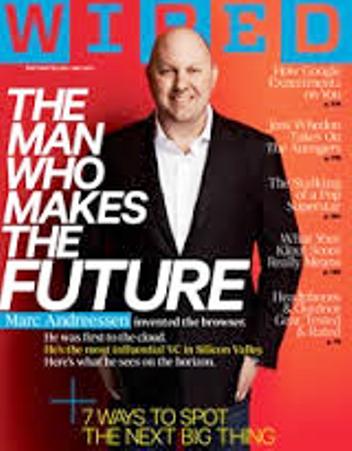
To Our Clients & Friends: Welcome to our series “Helping Entrepreneurs Succeed.” Each week we share a favorite video clip of a successful entrepreneur, investor or business leader on a variety of topics. This week, we again present Marc Andreessen, one of my favorite investors (as a result of his raw intelligence and extraordinary vision).
Venture Capitalists at Work – Part 3
by Scott Edward Walker on September 6th, 2012INTRODUCTION
This is the third and final part of my series on the book Venture Capitalists at Work, which is a solid collection of interviews by Tarang Shah of certain highly-successful investors. I have again set forth below some nuggets for entrepreneurs; and, in case you missed them, you can check out Venture Capitalists at Work – Part 1 and Venture Capitalists at Work – Part 2. Many thanks, Scott
Venture Capitalists at Work – Part 1
by Scott Edward Walker on June 26th, 2012INTRODUCTION
I just finished reading the book Venture Capitalists at Work, which is a collection of solid interviews by Tarang Shah of certain highly-successful investors. I have set forth below some nuggets for entrepreneurs. This is part one of a three-part series. I hope entrepreneurs find a few of the quotes helpful and get a better understanding of how VC’s think. Thanks, Scott
Biggest Legal Mistakes That Startups Make – Part 1
by Scott Edward Walker on May 13th, 2011Below is a video of my presentation a couple of months ago at a TechZulu event at CoLoft in Santa Monica. I hope you enjoy it (despite the audio issues); it starts at the 9:43 mark. Cheers, Scott (more…)
Do More Faster – Part II
by Scott Edward Walker on April 28th, 2011Introduction

This is part 2 of 2 of my post regarding the excellent book Do More Faster, which is a collection of articles/blog posts by successful entrepreneurs and investors, including the editors David Cohen, the founder and CEO of TechStars, and Brad Feld, the managing director of Foundry Group.
Do More Faster – Part I
by Scott Edward Walker on March 9th, 2011Introduction
I just finished reading the book Do More Faster, which is a collection of blog posts/articles by successful entrepreneurs and investors edited by David Cohen, the founder and CEO of TechStars, and Brad Feld, the managing director of Foundry Group. As Brad noted on his blog: “Our goal was to write a unique book full of useful information for any early stage entrepreneur. Rather than give advice or simply tell an entrepreneurial success story, we decided to blend the experience of the TechStars entrepreneurs and the TechStars mentors in an organized fashion.”
Below are a few nuggets from the first half of the book; I will share some second-half quotes in my next post. Cheers, Scott
Back to New York City: How I Came Full Circle
by Scott Edward Walker on February 2nd, 2011Background
I began my legal career as a corporate associate at two major law firms in New York City. After nearly eight years, however, I realized I wanted to spend the rest of my life helping entrepreneurs (like my father). I also saw a big problem in the legal marketplace — i.e., that the big-firm template generally doesn’t work for entrepreneurs and startups. Accordingly, in 2005, I moved to California — the land of the entrepreneurs — to try to solve this problem and launched Walker Corporate Law.

What Makes a Great Entrepreneur?
by Scott Edward Walker on January 19th, 2011Introduction
I’ve worked with hundreds of entrepreneurs over my 17+ years of practicing law, and clients and friends ask me all the time: “What makes a great entrepreneur? Why do some entrepreneurs make it and others fail? Hey Scott, what’s the secret sauce to being a successful entrepreneur?”


How Do I Raise Seed Capital If I Don’t Know Any Investors? – Part 2
by Scott Edward Walker on October 20th, 2010Introduction
This post is part 2 of my three-part series: “How do I raise seed capital if I don’t know any investors?” In part 1, I discussed the importance of hustling and building relationships in order to get warm introductions to investors. In this post, I will discuss a different approach: applying to one of the mentorship/seed capital programs.
Determination via Jessica Livingston
by Scott Edward Walker on September 22nd, 2010Introduction

I’ve been reading the book Founders at Work: Stories of Startups’ Early Days written by Jessica Livingston, a co-founder of Y Combinator (a seed-stage venture firm) and a very smart and interesting individual. The book is a collection of extensive interviews with founders of high-profile technology companies with respect to their earliest days, including Steve Wozniak (Apple), Craig Newmark (Craigslist), Mitch Kapor (Lotus), Caterina Fake (Flickr), Max Levchin (PayPal), and Sabeer Bhatia (Hotmail). There are many important takeaways and lessons to be learned, but the one that really struck a chord with me (as a former minor-league tennis player and now a corporate lawyer for entrepreneurs) is the importance of determination.
Helping Entrepreneurs Succeed: Jeff Bezos
by Scott Edward Walker on May 31st, 2010To Our Clients & Friends: Welcome to our new weekly series entitled “Helping Entrepreneurs Succeed.” Each week, we post a short video interview or presentation of a successful entrepreneur, investor or business leader on a variety of topics to help entrepreneurs succeed.
This week, we present Jeff Bezos, the founder, CEO and Chairman of the Board of Amazon.com and an extraordinarily smart entrepreneur, who discusses the importance of (i) obsessing over customers, (ii) inventing to solve problems and (iii) thinking long-term. I hope you enjoy it. Thanks, Scott
Motivational Clips for Entrepreneurs: We Have the Talent, But Heart Is Going to Get Us There. (via Michael Jordan)
by Scott Edward Walker on April 23rd, 2010“People often say that motivation doesn’t last. Well, neither does bathing – that’s why we recommend it daily.” – Zig Ziglar
Welcome to our weekly series entitled “Motivational Clips for Entrepreneurs.” Each week, we post a short video or movie clip to inspire and motivate our fellow entrepreneurs. Why? Because it’s fuckn tough trying to build a company – and we all need a little juice to help us push the ball forward. Hopefully, these videos are a little juice. Cheers, Scott
Doing Deals in the New Decade: 7 Tips for Entrepreneurs
by Scott Edward Walker on January 20th, 2010Introduction
This post is a longer, more comprehensive version of the post I wrote a couple of weeks ago for VentureHacks, one of the best websites for startups, in which I recommended five New Year’s resolutions for entrepreneurs. Indeed, as I noted in that post, during my 15+ years as a corporate lawyer (including nearly eight years at two major law firms New York City), I have seen entrepreneurs make certain fundamental mistakes over and over again in connection with doing deals. So what better way to welcome in the new decade than to provide seven basic tips for entrepreneurs.
(Message to all of my female clients and readers: (i) the term “guys” includes “gals”; and (ii) in tip #6, you can decide what the term “balls” includes.)
Techcrunch Gets It Wrong Re Tweetphoto CEO (Plus, Lessons For Entrepreneurs)
by Scott Edward Walker on November 19th, 2009Introduction
Yesterday evening, Michael Arrington of TechCrunch posted an interesting piece entitled “TweetPhoto CEO Says Too Much In Interview, Gets Fired. And That’s Just The Beginning…” (which has been subsequently re-posted throughout the blogosphere). Unfortunately, Arrington has gotten his facts all wrong — at least according to Dan Caulfield, the CEO in question.
Arrington sets forth in his post that Caulfield “apparently said too much in [his podcast] interview [with Frank Peters], disclosing confidential information about partnerships [and] was fired by the company for the transgression.” In the comments section to the post, however, Caulfield denied that there was any connection between his firing and the interview. First, yesterday evening, he noted that: “I conducted this interview on [the] Morning of Nov 9th. It had nothing to do with me leaving the company”; and then, this morning, he added that: “I was terminated a week prior to anyone hearing the interview. Events not connected.” Caulfield also retweeted the TechCrunch link to the post yesterday evening with a “Totally false!” insertion. (more…)
Sec Form D And Related Securities Laws: Q&A For Entrepreneurs
by Scott Edward Walker on November 3rd, 2009As I mentioned in a recent post, one of things that surprised me when I moved to Southern California from New York City in 2005 was the lack of sophistication of some of the players in the so-called “middle market.” Indeed, I was particularly surprised to see so many investment bankers and other intermediaries running around and raising capital for private companies without being registered as a “broker-dealer” with the Securities and Exchange Commission (the “SEC”). As I have previously discussed (see mistake #4 here ), this is a huge potential problem for the issuer, particularly in light of the recent changes to SEC Form D. Accordingly, I thought it would be helpful to entrepreneurs to provide them with a basic understanding of the new, revised Form D and related securities laws via a question-and-answer format. (more…)
Behind The Big Law-Firm Curtain: The Good, The Bad, The Ugly
by Scott Edward Walker on October 27th, 2009I’ve been doing deals as a corporate attorney for over 15 years now, including nearly 8 years in the trenches at two big law firms in New York City. Accordingly, I thought it would be helpful for entrepreneurs if I briefly peel back the curtain of the big law firm and explain how these firms work (i.e., the good, the bad, the ugly) so that entrepreneurs can make an informed decision as to whether it makes sense to be working with a big law firm with respect to a particular corporate project. Obviously, some of this is a bit self-serving, but entrepreneurs need to understand that the assumption “the bigger, the better” — i.e., the bigger the law firm, the better the representation — is not necessarily the case. The video version of this post is set forth directly below.
Launching A Venture: Ten Tips For Entrepreneurs
by Scott Edward Walker on September 15th, 2009Below are ten tips for entrepreneurs who are launching a startup that will seek venture capital (“VC”) financing.
1. Protect Yourself from Personal Liability. The entrepreneur’s first step in connection with launching a startup should be to form an entity that will protect against personal liability. As discussed below, a Delaware C-corporation is generally the recommended choice; however, in certain rare circumstances, it may be prudent for the entrepreneur to form an S-corporation or a limited liability company to obtain “pass-through” tax treatment (and then convert the entity to a C-corporation down the road, if necessary). The bottom line is that the entrepreneur should seek the advice of corporate and tax counsel in connection with the formation of any business organization (e.g., shareholders in S-corporations — as opposed to C-corporations — are not eligible for the “qualified small business stock” capital gains tax break; and losses in C-corporations may be deductible up to $50,000/yr. or $100,000/yr. on a joint return with respect to “Section 1244 stock”). (more…)